

Cimenterie de Charlevoix
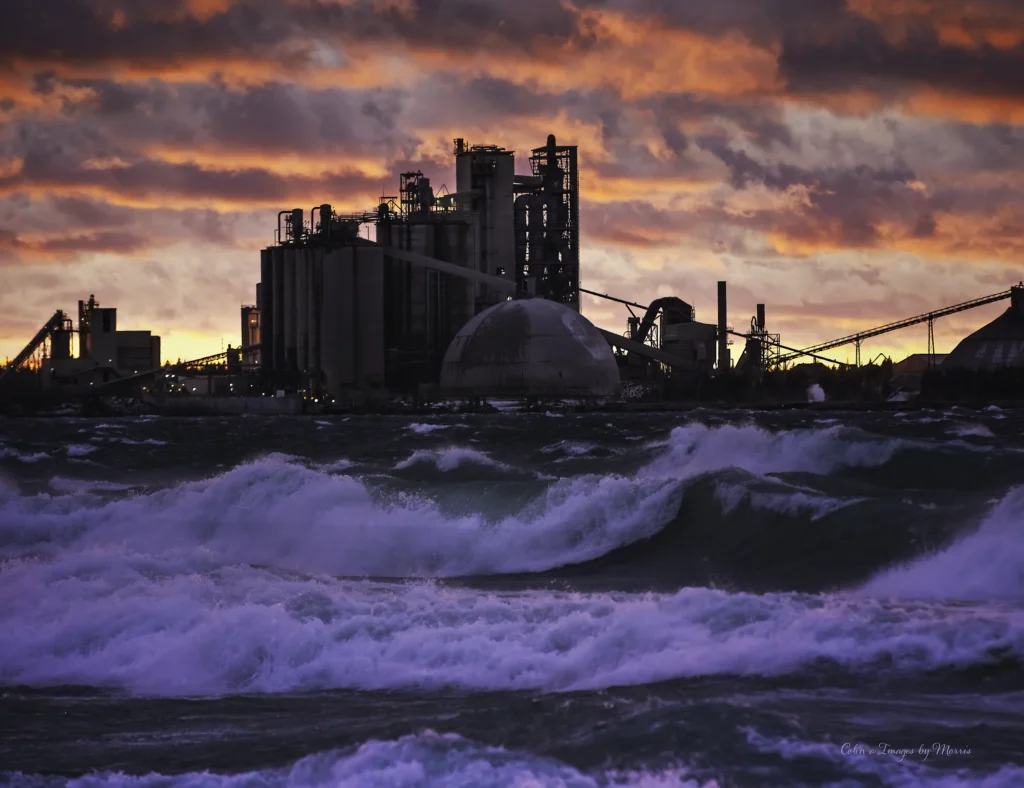
Tle ciment de Charlevoix Plant elle se situe sur la rive nord du lac Michigan. L'un des plus opérations établies dans le St Le réseau Marys Cement, l'usine s'appuie sur un site carrière de calcaire avec des réserves qui s'étendre bien au-delà de l'année 2100. Ciment produit ici voyage en barge à travers le lac Michigan vers les terminaux dans Wisconsin, Chicago et l'ouest Michigan. C'est une production installation construite pour le long terme, dans un communauté dont elle fait partie depuis des décennies.
Notre histoire
L'usine a ouvert ses portes en 1967 et a rejoint le réseau St Marys Cement en 2005. Dès cette année-là, l'entreprise a investi dans des systèmes de contrôle de la pollution afin de réduire le bruit et les émissions atmosphériques, et s'est associée au Département des ressources naturelles du Michigan pour des efforts de conservation, notamment l'empoissonnement et la création d'habitats pour les pygargues à tête blanche sur le site de l'usine.
En 2014, St Marys Cement a lancé un important programme de modernisation de son usine de Charlevoix. L'usine a été dotée d'un nouveau broyeur à matières premières, d'une tour de préchauffage, d'un four modifié, d'un nouveau refroidisseur et d'un nouveau broyeur de finition. Sa capacité de production est passée de 1,4 million à 2,1 millions de tonnes par an. L'usine fonctionne désormais avec un préchauffeur à sec et un four de précalcination. La carrière située sur le site renferme des réserves suffisantes pour assurer la production jusqu'au siècle prochain.
Rapports
L'usine de Charlevoix détient les certifications ISO 9001 (Management de la qualité), ISO 14001 (Management environnemental) et ISO 45001 (Santé et sécurité au travail), et fonctionne selon un système de gestion intégré qui couvre la qualité, l'environnement et la sécurité des travailleurs dans un cadre unique.
Les déclarations environnementales de produits (DEP) spécifiques à chaque usine sont publiées ici. Elles fournissent des données vérifiées et évaluées par un organisme tiers sur le cycle de vie de nos produits cimentiers, de l'extraction des matières premières à la fabrication. À mesure que le programme de l'usine relatif aux combustibles alternatifs progresse, ces documents continueront de refléter ces progrès.
Relations communautaires
La ville de Charlevoix compte environ 2 500 habitants permanents. La présence de l'usine, par le biais de l'emploi, des partenariats de conservation et des investissements communautaires, a façonné la région pendant près de six décennies.
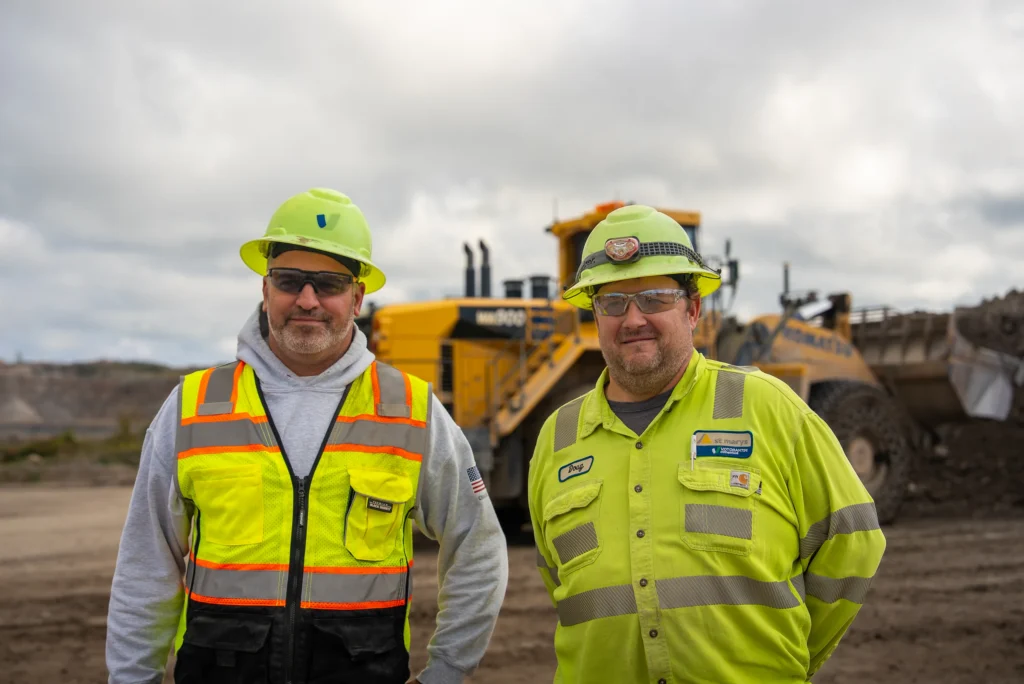
Ici, l'emploi se transmet de génération en génération. Le grand-père d'une employée conduisait autrefois des engins lourds dans la même carrière pour laquelle elle conçoit aujourd'hui des projets, et son fils a depuis rejoint l'usine à son tour : trois générations liées à la même entreprise. À Charlevoix, le travail en usine a la fâcheuse habitude de rester dans les familles, comme la terre et la communauté elles-mêmes.
Les employés participent à des projets de plantation d'arbres et à des actions de conservation visant à protéger le littoral et l'environnement naturel autour de l'usine. L'équipe entretient une communication ouverte avec les riverains et utilise les voies hiérarchiques établies pour répondre à leurs préoccupations concernant le bruit, les émissions et les activités de l'usine.
La sécurité des personnes se trouvant à proximité de cette centrale influence la planification de ses projets, sa prise en compte des préoccupations de la communauté concernant le bruit et les émissions, ainsi que sa communication proactive avec les riverains. Il s'agit là d'un dialogue ouvert en pratique, une pratique constante maintenue depuis des décennies.

Initiative pour des carburants à faible teneur en carbone

Charlevoix est un chef de file du réseau St Marys Cement en matière d'énergies alternatives. Aujourd'hui, environ 40 % de l'énergie de l'usine provient de sources alternatives plutôt que du charbon ou du coke de pétrole. Il s'agit de sous-produits industriels non recyclables qui, autrement, seraient enfouis. Ils sont récupérés et traités par co-traitement réglementé, sous des contrôles environnementaux stricts.
 United Materials
 Superior Materials
 Prairie Materials
 Matériaux de construction Canada
 VC Global