
The Cement Supplier You Can Count On
A century of operating in our communities has made St Marys Cement a familiar and trusted name to the customers and neighbours who rely on it. It started, as these things often do, with a piece of land and someone willing to bet on it.
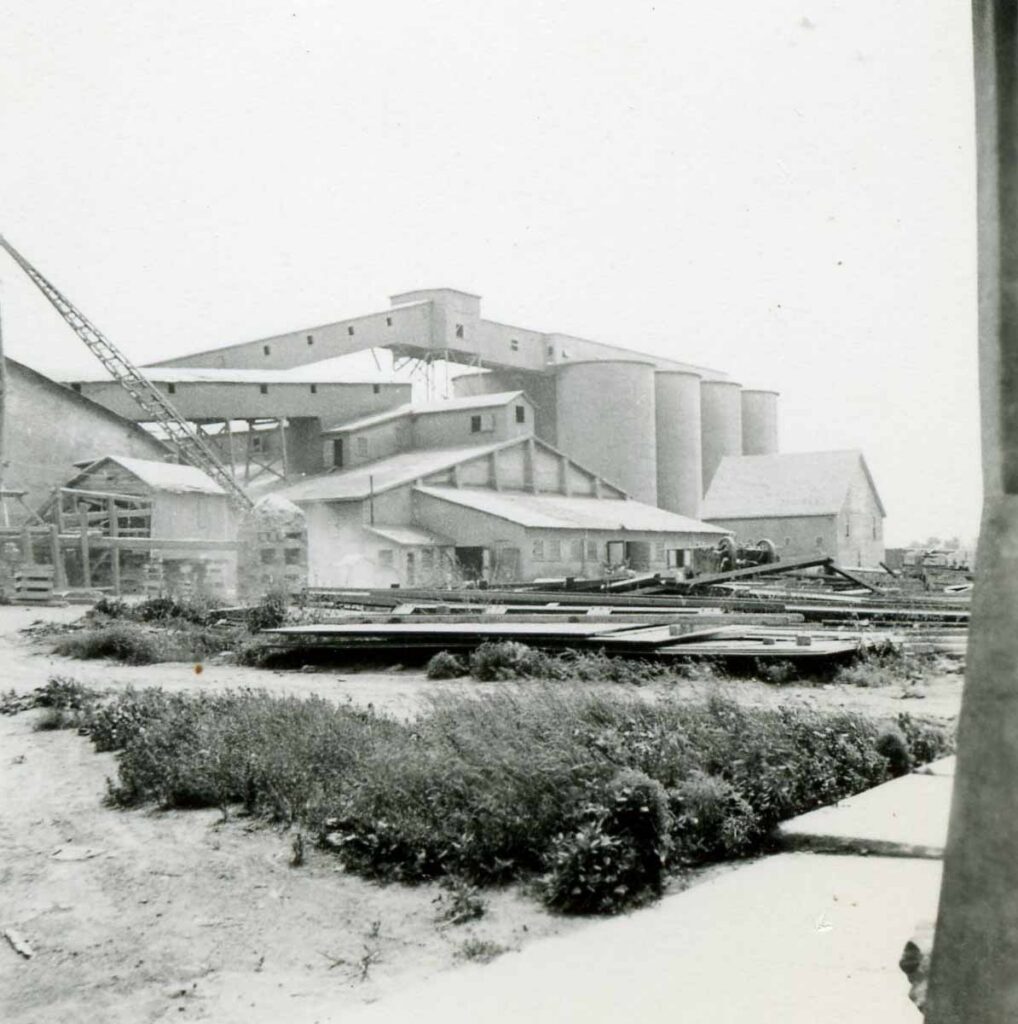
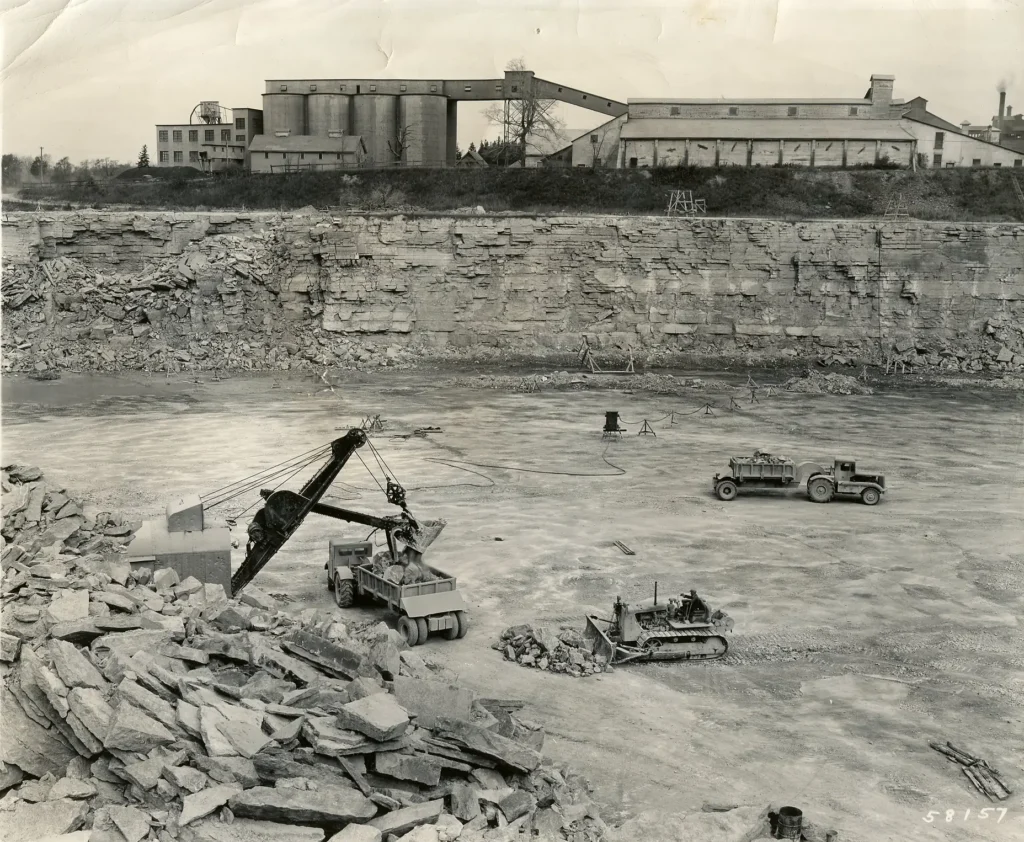
In 1912, John Lind and Alfred Rogers broke ground on a two-kiln cement plant in the limestone-rich town of St. Marys, Ontario. Cement was delivered by horse-drawn carriage at nine dollars a tonne. The structures it built are still standing.
More than a century later, St Marys Cement supplies cementitious materials to customers across Canada and the United States through six plants, a production capacity exceeding five million metric tonnes, and an integrated distribution network of barges, rail cars, and trucks spanning the Great Lakes region, Eastern Canada, and the Northeastern United States. For over 110 years, the Pyramid logo on a bag of cement has stood for consistent quality, reliable supply, and a company whose record is earned with every order, every delivery, and every relationship built over time.
When Votorantim Cimentos expanded into North America in 2001, St Marys Cement was the foundation of that entry, the first footprint on the continent for one of the world’s largest cement producers.
Our VC Way, a set of shared principles that every person across Votorantim Cimentos lives by, guides us on every continent where we are present.
Products Made for What You Are Building
St Marys Cement manufactures a full range of cementitious materials, each rigorously tested to meet the demands of today’s construction industry.
Portland Cement
dependable, general-use cement for everyday construction, built on decades of trusted performance.
Cement Type IL/GUL (Portland Limestone Cement)
a proven lower-carbon alternative to ordinary Portland cement, delivering the same reliable performance with a reduced carbon profile.
CemPlus (Slag Cement)
a high-performance supplementary cementitious material produced from a byproduct of iron manufacturing, reducing the clinker content in your mix and the carbon footprint of your concrete.
Blended Silica Fume Cement
engineered for high-performance applications where strength, durability, and lower carbon content are all required.
Every product is checked against recognized standards before it leaves our facilities. Our technical team works alongside ready-mix producers and engineers to get the mix right, because quality people and quality products have always been the hallmark of our company.
A Distribution Network Built for Reliability
A great product depends on timely delivery. Plants and terminals span the regions we serve, connected by an intricate system of barges operating across the Great Lakes, 175 leased rail cars moving product to land-locked terminals, and truck fleets handling last-mile delivery across the region. More than 50 percent of cement moves by barge, one of the most efficient freight modes available. The result is a network designed around your schedule and your project, not ours.

Over 110 Years of Getting It Right
Consistency at St Marys Cement is the result of systematic, documented testing against recognized international standards at every plant. A product does not leave the plant on the strength of appearance. It leaves once the data confirms it meets specification. Our technical team works directly with ready-mix producers, engineers, and project teams, bringing decades of field knowledge to every mix design conversation. The depth of expertise accumulated across generations of employees who have built careers here is what makes us worth trusting with your most demanding specifications.
Trust and Simplicity, one of the nine principles of Our VC Way, guides every customer relationship: clear documentation, dependable performance, and a technical team that treats your project with the same ownership they bring to their own work.
Accountability is Built Into How We Operate
St Marys Cement has been operating on and alongside the land it quarries since 1912. All plants now produce Portland Limestone Cement, a product with a lower carbon profile than ordinary Portland cement. The St Marys plant earned Natural Resources Canada’s ENERGY STAR for Industry certification in 2024, placing it in the top quartile for energy performance across Canada and the United States. At the Charlevoix plant, approximately 40 percent of kiln energy now comes from alternative sources rather than coal or petroleum coke, through regulated co-processing of non-hazardous, non-recyclable industrial byproducts. Plant-specific Environmental Product Declarations (EPDs) are published for every facility, providing verified, third-party assessed data on the environmental profile of our products for every project team that specifies our cement.
Progress is measured in certifications, documented results, and published reports. Our Integrated Report gathers environmental, social, and governance performance into one verified document.
Learn and Evolve, one of the nine principles of Our VC Way, means we never stop improving. What changes along the way stays on the record, available for anyone who wants to see it.
Safety Comes First
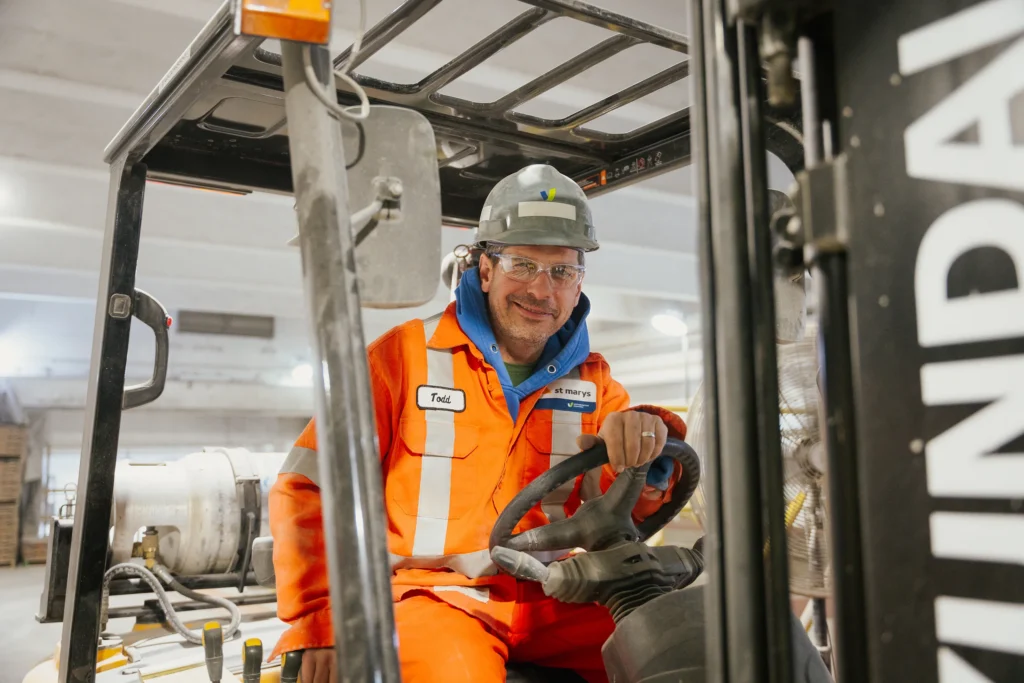
Nothing matters more to us than the safety of our people. It is the first principle of Our VC Way and the standard every shift, every plant, and every decision is measured against. It comes before results, before schedules, and before any other operational priority. A discipline reflected in long incident-free records across our network, in safety training embedded in every new employee’s first days, and in a culture where speaking up about a hazard is expected, not exceptional. Safety looks different today than it did when this company began, but the commitment behind it does not. What started as workers looking out for one another on the job site has become a documented, company-wide standard that governs how every plant operates.
Built Into the Communities We Call Home
Our St Marys Cement team helps coach youth hockey in Clarington, builds homes with Habitat for Humanity in Northumberland, and stocks shelves at the Stratford House of Blessing Food Bank.
Since 1912, St Marys Cement has completed more than 200 community projects, created more than 900 jobs, and earned more than 80 awards in the communities surrounding its operations.
Our employees do not leave their commitment to Our VC Way at the plant gate. They carry it home, into the communities where they live, and it shows up as Sustainable Legacy and Lasting Results in equal measure. At St Marys Cement, these values have guided our work since long before we had names for them.


Global Scale, Local Accountability

St Marys Cement is part of Votorantim Cimentos North America (VCNA) and its global parent, Votorantim Cimentos, a building materials company founded in 1933 and operating across ten countries with a combined North American production capacity of 7.8 million metric tonnes per year. When Votorantim Cimentos chose St Marys Cement as its first North American footprint in 2001, it was recognizing a company with the kind of track record, market position, and reputation that a global organization builds its continental presence around.
Through every era of growth, every ownership transition, and every expansion since, the integrity, the customer relationships, and the commitment to the regions we serve have remained consistent. Global scale provides the investment and resources that keep this network at the forefront of the industry. What it has not changed, and will not change, is that working here still feels like a close-knit family.
A Place Worth Building a Career
People build careers at St Marys Cement that span decades. Fourth-generation families work side by side on the same sites where their great-grandparents quarried limestone more than a century ago. Women have stepped into operations, engineering, and leadership roles across the network, in a culture shaped by the Our VC Way value of Ethics and Diversity.
If you are looking for innovation, career growth, support, real mentorship, and a place that feels like family, this is it. Explore careers at St Marys Cement and find your place on a team that has been building something worth being part of since 1912.

News
Stay current with the latest from St Marys Cement: industry updates, community stories, sustainability milestones, and the people behind the work.
 United Materials
 Superior Materials
 Prairie Materials
 Canada Building Materials
 VC Global