

Notice of Intention to Apply Under Ontario Regulation 79/15
Alternative Low-Carbon Fuels for the St. Marys Cement Inc. (Canada) - Bowmanville Cement Plant
Project Overview
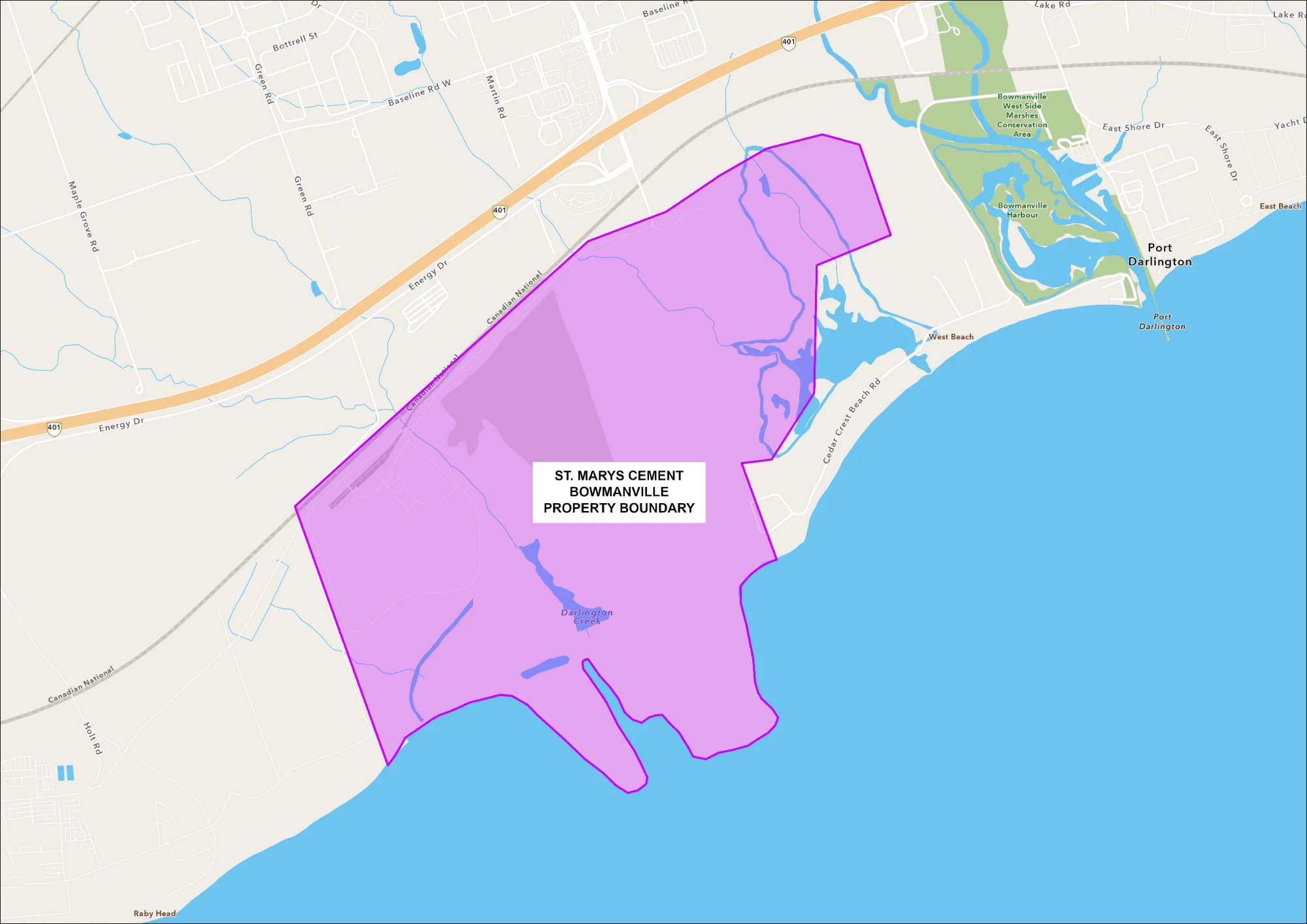
St. Marys Cement Inc. (Canada) (St. Marys Cement) is proposing to amend Environmental Compliance Approval (ECA) No. 0550-CEAHMA for its Bowmanville Cement Plant to increase its use of alternative low-carbon fuels (ALCFs), at 410 Bowmanville Avenue, Bowmanville, Ontario, L1C 7B5.
St. Marys Cement is committed to continue reducing its reliance on greenhouse gas emissions-intensive coal and petroleum coke in Ontario while diverting materials from landfills.
St. Marys Cement originally started using ALCFs in 2018 as part of a Demonstration Project after which the use of ALCFs was approved for permanent use in 2021.
The Notice of Intention to Apply for Amendment under Ontario Regulation 79/15 was prepared in accordance with section 8.1 of Ontario Regulation 79/15 in contemplation of an application to amend the ECA.
What are Alternative Low-Carbon Fuels?
Alternative Low-Carbon Fuels, or ALCFs, are materials that can be used in place of conventional fuels such as petroleum coke and coal in certain industrial processes, including cement production. Under Ontario Regulation 79/15, an ALCF must meet certain requirements; in addition to having a lower carbon dioxide emission intensity than the petroleum coke or coal it is replacing, it must produce enough useful energy and must only be composed of accepted materials.
ALCFs are biomass or non-recyclable materials that would otherwise require disposal. Some examples of viable ALCFs include biomass recovered from construction and demolition waste, and non-recyclable plastics from manufacturing rejects.
Using these materials as fuels allows their remaining energy value to be recovered to reduce the amount of petroleum coke and coal required to manufacture cement. By displacing petroleum coke and coal, ALCFs reduce the reliance on fossil fuels and lower greenhouse gas emissions while supporting the broader circular economy.
What is Being Proposed?
As part of the proposed ECA Application, St. Marys Cement will seek approval to:
- increase the maximum ALCF use from 400 tonnes per day to 800 tonnes per day; and
- incorporate planned modifications associated with ALCF ancillary equipment and upgrades to the calciner to accommodate the increased ALCF use.
In addition, St. Marys Cement will request the approved list of ALCF baskets and materials on the ECA to be:
- Material that is biomass fuel derived from harvested plant and forest sources, end of life agricultural sources, Woodwaste or Agricultural Waste, and includes but is not limited to sawdust, wood chips, wood, miscanthus grass, millet, sorghum, hemp, switch grass, and maize
- Material that is comprised of non-recyclable plastics, including but not limited to manufacturing rejects, material resource recovery facility rejects, nylon (including but not limited to tire fluff), plastics bags and packaging
- Material that is comprised of construction, renovation & demolition waste, including but not limited to scrap wood, treated lumber, carpets, textiles, sawdust, nylon, floor laminates and asphalt shingles
- Material that is comprised of non-recyclable paper fiber/wood/plastic composites, including but not limited to single-serve coffee pods, printed papers, paper towels, rejects and trimmings from paper recycling facilities such as ragger tails (residue including plastic trimmings, staples, paper fibre and metal wire), end rolls and cores
- Material that is comprised of rubber (non-tire derived), including but not limited to shredded conveyor belts
The Bowmanville Cement Plant’s current ECA may be found here.
Alternative Low-Carbon Fuels
An ALCF is a fuel that has a carbon dioxide emission intensity less than the carbon dioxide emission intensity of the petroleum coke or coal it is replacing and must meet one of the following criteria to satisfy the fuel requirements in Ontario Regulation 79/15.
- Each fuel:
- must not be derived from or composed of any material set out in Schedule 1 of Ontario Regulation 79/15;
- is wholly derived from or composed of materials that are biomass or municipal waste or a combination of both; and
- unless the fuel is wholly derived from or composed of materials that are solid biomass, has a high heat value of at least 10,000 megajoules per tonne.
- The fuel is wholly derived from or composed of organic matter, not including peat or peat derivatives, derived from a plant or micro-organism and grown or harvested for the purpose of being used as a fuel.
The existing and potential ALCFs for use at St. Marys Cement are summarized below:
Biomass
Examples: sawdust, wood chips, wood, miscanthus grass, millet, sorghum, hemp, switch grass, and maize
Non-recyclable Plastics
Examples: manufacturing rejects, material resource recovery facility rejects, nylon (including but not limited to tire fluff), plastics bags and packaging
Construction, Renovation & Demolition Waste
Examples: scrap wood, treated lumber, carpets, textiles, sawdust, nylon, floor laminates asphalt shingles
Non-recyclable Paper Fiber/Wood/Plastic Composites
Examples: single-serve coffee pods, printed papers, paper towels, rejects and trimmings from paper recycling facilities
Non-Tire Derived Rubber
Examples: shredded conveyor belts
The carbon dioxide emission intensity values of each conventional fuel (petroleum coke and coal) and ALCF were calculated in accordance with Ontario Regulation 79/15. The results demonstrate that the ALCFs have lower carbon dioxide emission intensities when compared to petroleum coke and coal. The ALCFs also have high heat values of at least 10,000 megajoules per tonne, meeting the requirements of Ontario Regulation 79/15.
More details about the ALCFs and completed requirements under Ontario Regulation 79/15 can be found in the Carbon Dioxide Emission Intensity Report.
Replacement of Conventional Fossil Fuels
The Plant is proposing to increase its use of ALCFs up to 800 tonnes per day to displace the use of conventional fuel (i.e., petroleum coke or coal). The ALCF materials are expected to continue to be blended and mixed evenly in the ALCF building before being conveyed to the kiln. The mix will vary with material availability, which changes how much petroleum coke and coal are needed to meet the total heat required for clinker production.
For a typical mix of ALCFs at the maximum throughput of clinker, the conventional fuel displacement is anticipated to be 400 to 500 tonnes per day by weight which translates to approximately 75% by energy.
800
tonnes per day of ALCFs proposed, up from 400 tonnes per day
75%
of conventional fuel displaced by energy, or 400 to 500 tonnes per day by weight
Activities Requiring Approval
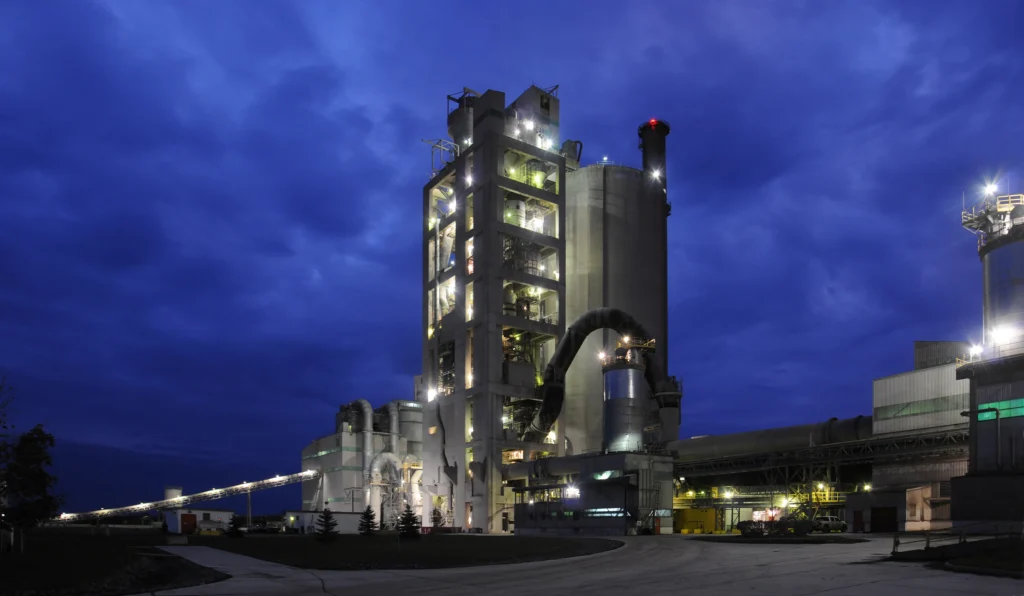
The proposed ECA Application incorporates planned modifications associated with ALCF ancillary equipment and upgrades to the calciner to accommodate the increased ALCF use. These proposed activities require approval under Part II.1 of the Environmental Protection Act. In addition, the proposed ECA Application incorporates modifications that are not related to ALCFs, including main kiln stack modification and addition of Finish Mill #4 which were assessed as part of the limited operational flexibility process. Details regarding these modifications and their assessment may be found in the Emissions Summary and Dispersion Modelling Report and the Acoustic Assessment Report.
Potential Environmental Effects and Mitigation Measures
The proposed modifications related to the use of ALCFs in place of conventional fuels for combustion were reviewed for potential effect on air emissions and local air quality. The proposed modifications were also reviewed regarding effects on noise and traffic. Where required, mitigation measure would be implemented to control or minimize the anticipated effects.
Air Emissions
The Emission Summary and Dispersion Modelling Report incorporated the proposed modifications into the worst-case operating scenario for the Bowmanville Cement Plant. To evaluate the potential effects on air quality, contaminants associated with the proposed modifications were assessed against the applicable Air Contaminant Benchmarks established by the Ministry of the Environment, Conservation and Parks under Ontario Regulation 419/05. The maximum predicted concentrations are below their applicable Air Contaminant Benchmarks. The air dispersion modelling therefore demonstrates that, with the proposed modifications and existing mitigation measures in place, predicted off-site concentrations remain below the applicable benchmarks under normal operating conditions.
The Bowmanville Cement Plant uses multiple air pollution control systems to minimize releases of contaminants to the air. These include baghouses to control particulate matter, a wet scrubber to reduce sulfur dioxide emissions, and Selective Non-Catalytic Reduction to reduce nitrogen oxide emissions.
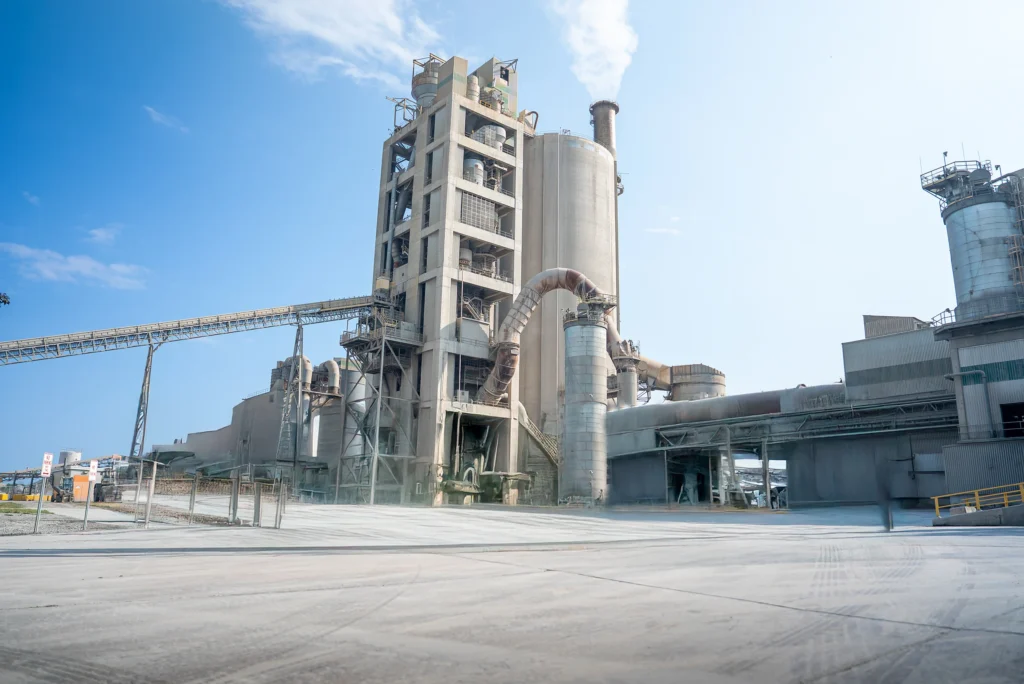
In addition to these pollution control systems, the cement manufacturing process itself takes place under conditions that are highly effective at breaking down and destroying organic materials. Cement manufacturing requires extremely high temperatures, with raw materials reaching approximately 850°C in the calciner and 1,500°C at the main kiln burner. These temperatures, together with the time materials spend in the kiln system and the presence of oxygen, create conditions that are highly effective at breaking down and destroying organic materials introduced with the fuels. In addition, flue gases leaving the kiln system are cooled by high pressure water sprays in the downcomers which rapidly reduce the gas temperature to 200°C to prevent the formation of organics in the 200-400°C range.
Air Quality
The Air Quality Study was completed to characterize existing air quality conditions and historical trends within the Bowmanville-Courtice area. Using the results of the Emission Summary and the Dispersion Modelling Report, the Air Quality Study also assessed the potential incremental effect of increasing ALCF use at the Facility from 400 tonnes per day to 800 tonnes per day.
Report and more details coming soon
Noise
The Acoustic Assessment Report assessed noise emissions from the Bowmanville Cement Plant, including the proposed modifications. Measures used to control noise across the site include equipment enclosures, the design of baghouses and fans, and truck management.
The assessment indicates that sound levels with the proposed modifications would remain within the applicable limits set by the Ministry of the Environment, Conservation and Parks. The contribution of sound from the proposed ALCF modifications to the facility-total sound level is not significant, and that sound levels of the Bowmanville Cement Plant are dominated by existing equipment/operations unrelated to the ALCF operations.
Traffic
As described in the Traffic Impact Brief, the proposed increase of ALCF use from 400 to 800 tonnes per day would not change the peak-hour delivery rate of three trucks per hour.
All trucks associated with St. Marys Cement, including trucks delivering ALCF materials, will continue to comply with applicable local and regional traffic by-laws, including speed limits and restrictions on engine braking.
Environmental Monitoring
St. Marys Cement operates in compliance and in accordance with its ECA conditions and applicable regulatory requirements. Conditions in the ECA require St. Marys Cement to operate and implement measures to control or minimize potential environmental effects and assess their effectiveness.
St. Marys Cement has systems that monitor environmental performance, verify compliance with approval requirements, assess the effectiveness of mitigation measures, and address potential environmental effects associated with ALCF use.
As described in the Emission Summary and Dispersion Modelling Report, the Bowmanville Cement Plant uses a Continuous Process Monitoring System to monitor key kiln operating parameters and ALCF feed rates. This monitoring helps maintain optimal process conditions and product quality and helps ensure that the Plant operates in accordance with the requirements of its current ECA. In addition, a Continuous Emissions Monitoring System is used to continuously monitor emissions from the kiln stack.
St. Marys Cement will continue to implement its extensive Operating Procedures and Maintenance Programs for all on-site equipment, including specific procedures for handling, processing and combustion in the cement kiln of ALCFs. These programs specify inspections and a variety of procedures to prevent or minimize upset conditions and emissions. The Bowmanville Cement Plant will also continue carrying out the annual source testing while using ALCFs and conventional fuels in the Kiln System for combustion.
Public Information Session
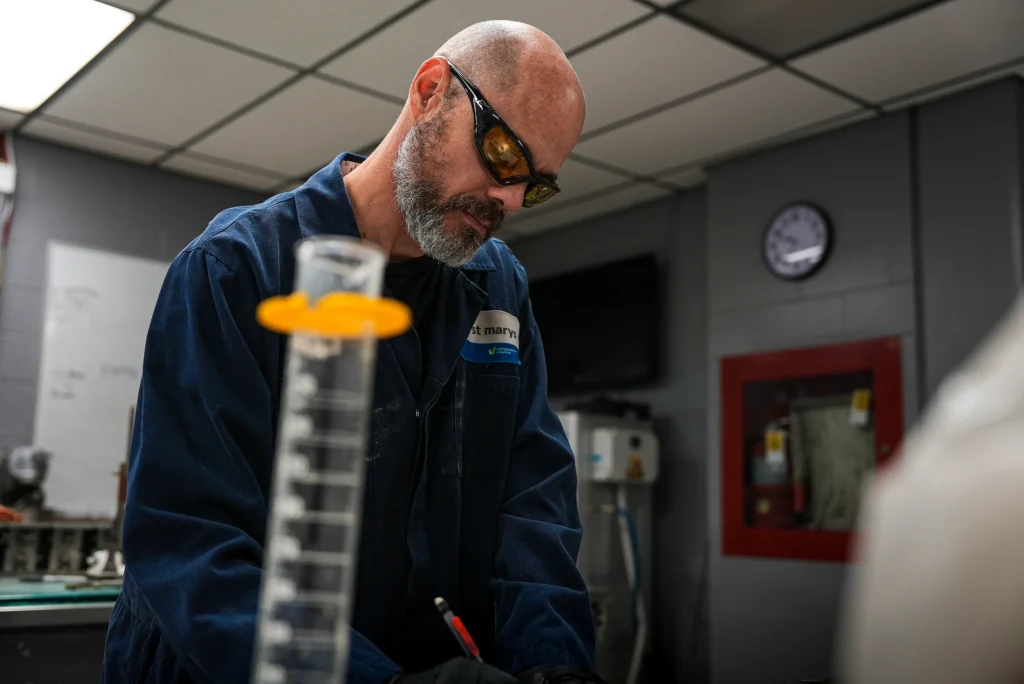
In support of the proposed ECA Application, St. Marys Cement will hold a voluntary Public Information Session. The purpose of the Public Information Session is to provide information about the proposed ECA Application, review project information, obtain public feedback, and answer questions. Members of the public are welcome to attend at any time during the Public Information Session hours. Members of the Project Team will be available throughout the evening to answer questions and receive comments.
Date and Time: November 25, 2026 from 5:30 p.m. to 8:30 p.m.
Location: Garnet B. Rickard Recreation Complex, Hall #3
Address: 2440 Durham Regional Hwy 2, Bowmanville, ON L1C 3K2
Proposed ECA Application Documents and Public Consultation
The proposed ECA Application and supporting materials are available for public review below.
Members of the public may review and comment on the proposed ECA Application during the 30-day comment period until December 13, 2026. Comments may be submitted by email at: BowmanvilleALCF@wsp.com.
Contact Information
Website: www.stmaryscement.com/bowmanville-alternative-fuels/
E-mail: BowmanvilleALCF@wsp.com
Supreet Kaur
Environmental Manager
St Marys Cement Inc.
Phone: (905) 623-3341 Ext. 1248
Nadia Dabagh
Consultation Lead
WSP Canada Inc.
 United Materials
 Superior Materials
 Prairie Materials
 Canada Building Materials
 VC Global